Best Good Laptop Buying Guide — Black Friday Deals 2026
A good laptop is not simply the one with the most prominent Black Friday offer; it is the one whose operating system, screen, storage, and connections suit the way you expect to use it. These three options point toward different priorities: a student-focused model with a webcam cover, an ASUS Chromebook running Chrome OS, and a Lenovo V15 with a broad selection of listed ports. Start by naming the tasks and accessories that matter in your routine, then compare the exact model and configuration shown in the offer. Black Friday can make a shortlist worth revisiting, but a deal is useful only if the laptop’s stated features match your needs.
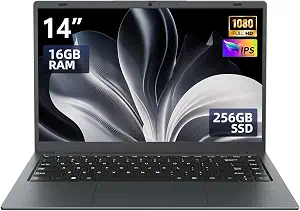
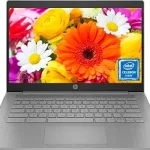
Best Overall is an editorial pick among these three listings, not a claim of measured superiority. This student laptop is a flexible place to start if your priorities include a conventional FHD screen, 16GB RAM, and an SSD. Its 14.0-inch IPS FHD display is specified at 1920×1080, a screen size and resolution to weigh against where you will study and whether you often work with a separate display. The listed 16GB RAM and 256GB SSD give you concrete configuration details to compare with the files and applications you expect to use. They do not, by themselves, promise a particular speed or amount of usable space.
The processor is a Pentium 6500Y processor (7W). Consider that exact processor alongside the applications you need, rather than assuming a model name or memory figure settles the question of suitability. If a school, employer, or software provider specifies requirements, compare them directly with this listing before buying. The provided facts do not identify an operating system, so confirm the full product configuration if that detail matters to your decision. A 5000mAh battery (7.4V) is a capacity specification, not a stated runtime; do not treat it as an hours-away-from-an-outlet promise.
Two USB 3.2 Gen1 ports give shoppers a specific connection detail to compare with the devices they plan to attach. The webcam cover is also a named feature for someone who wants a physical way to cover the camera. Those details may help make this option worth considering for classes, general study, or a home workspace, while the processor and storage still deserve a close match to your own workload. During Black Friday, check that the offer is for this exact model and configuration, and compare its listed features with your requirements instead of judging it by the event label alone.
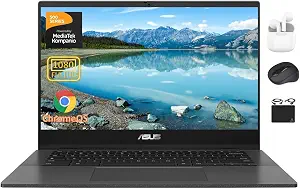
ASUS Chromebook Laptop Student Business 2024 (ASIN B0DFDWN8RT)
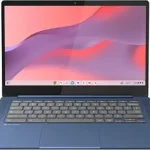
Best Budget is the editorial label for this ASUS Chromebook among the products in this guide; it does not establish that it has the lowest price or is a market-wide award. Its clearest point of difference is Chrome OS. That makes the operating system an important early decision: consider it if the services and applications you rely on meet your needs in that environment, and verify any required software before you commit. The listing identifies an 8-Core MediaTek Kompanio 520 processor, 4GB RAM, and storage described as 128GB (64GB eMMC+64GB Card). Those details are useful for comparing this specific configuration, but they do not establish how it will handle every application or how much space your own files will occupy.
The 14-inch FHD Anti-Glare Display is specified at 1920 x 1080 pixels. That may be a useful screen description to compare with your study area, lighting, and preference for screen size; the anti-glare wording is part of the listing, not a promise that every reflection or viewing condition disappears. For shoppers who value a stated battery-life figure, the listing says up to 15-hour battery life. Keep the qualification: actual use should not be assumed to match the maximum claim. An integrated privacy shutter is another clear feature to consider if you want a camera privacy control.
Wi-Fi 6 and Bluetooth 5.3 combo are the listed wireless connectivity details, which can be compared with the connection requirements of your network and accessories. They should not be read as a guarantee about a particular network or device. This Chromebook may suit someone whose main choice is an environment and configuration that fit their needs, rather than someone selecting solely by memory or storage figures. In a Black Friday comparison, check the exact ASUS model and configuration, the Chrome OS requirement, and the offer details together. The Best Budget label is a guide to the editorial grouping here, not proof of a price advantage.
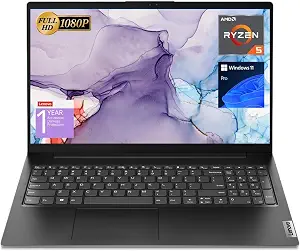
Best for Port Variety is this guide’s editorial label for the Lenovo V15, based on its listed connections rather than a tested comparison. It offers a useful point of focus for shoppers who regularly need to connect a mix of peripherals or displays: the listing names USB 3.0 Type-A, USB 2.0 Type-A, USB Type-C, HDMI, and RJ45. Compare those exact connections with the devices you use and the ports they require. The list can help you assess fit, but it does not specify every connection detail or guarantee compatibility with a particular accessory. The Numeric Keyboard is another listed feature that may matter if your routine includes frequent number entry.
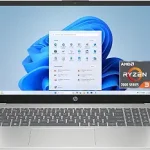
This configuration pairs Windows 11 Pro with an AMD Ryzen 5 5500U Processor (6 Cores, 12 Threads, 8MB L3 Cache, Clock Speed:2.1GHz, up to 4.0GHz Turbo). The processor description is specific, but it is not a substitute for checking software requirements or deciding whether the system fits your own workload. The listing also specifies 16GB RAM and a 512GB PCIe NVMe M.2 Solid State Drive. Those figures give you a basis for comparing this configuration with your storage and application needs; they do not say how much space will remain available after setup or files are added.
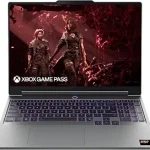
The 15.6-inch diagonal, FHD (1920 x 1080) screen is worth considering if you prefer the listed larger display format over a smaller-screen option. Think about your usual workspace and whether portability or viewing area matters more to you; the provided facts do not state the laptop’s weight or dimensions. For Black Friday, verify that the Lenovo V15 offer has the same operating system, processor, memory, storage, and connections you intend to buy. Its Best for Port Variety label points to the listed port selection, while your own software, screen, and storage requirements should determine whether the overall configuration belongs on your shortlist.
Key specs
Display
15.6″ diagonal, FHD (1920 x 1080)
Processor
AMD Ryzen 5 5500U Processor (6 Cores, 12 Threads, 8MB L3 Cache, Clock Speed:2.1GHz, up to 4.0GHz Turbo)
Memory
16GB RAM
Storage
512GB PCIe NVMe M.2 Solid State Drive
Operating system
Windows 11 Pro
Connectivity
1 x USB 3.0 Type-A, 1 x USB 2.0 Type-A, 1 x USB Type-C, 1 x HDMI, 1 x RJ45
Keyboard
Numeric Keyboard
Let the software requirement set the first filter
An operating system can shape whether a laptop fits your existing routine, so decide what applications and services you need before reacting to a Black Friday offer. The ASUS listing specifies Chrome OS, while the Lenovo V15 listing specifies Windows 11 Pro. If a school, workplace, or provider names a required operating system or application, check that requirement against the exact listing. Do not assume that an application is available or works in a particular way just because a laptop has a familiar brand or processor. The student laptop’s provided facts do not state its operating system, so confirm that point if it could affect your choice.
Processor names are also not a complete answer on their own. The student model lists a Pentium 6500Y processor (7W), the Chromebook lists an 8-Core MediaTek Kompanio 520, and the Lenovo lists an AMD Ryzen 5 5500U Processor with its clock and core details. Use those exact descriptions when checking a stated software requirement, but avoid treating the names as a universal ranking of everyday experience. A Black Friday comparison is most useful when the offer is for the configuration you have already matched to your actual software needs.
Choose a screen for the places you use it
The three screen descriptions create different considerations rather than a single automatic winner. The student laptop lists a 14.0-inch IPS FHD (1920×1080) screen; the ASUS lists a 14-inch FHD Anti-Glare Display at 1920 x 1080 pixels; and the Lenovo lists a 15.6-inch diagonal, FHD (1920 x 1080) display. If you work in a compact space or carry a laptop between study locations, consider how the listed screen size fits that routine. If you spend more time at a desk and prefer a larger stated display, the Lenovo’s screen description may deserve attention.
The ASUS listing’s anti-glare wording is a detail to weigh if it matters in your workspace, but do not interpret it as a guarantee for every lighting condition. Likewise, a resolution specification tells you what the listing states, not whether a particular screen will feel comfortable for your eyes or suit your preferred layout. Think through the documents, reading, or other tasks you expect to do, and compare screen details on the exact offer page during Black Friday. A screen choice should reflect your working environment, not just a banner or a single specification.
Give memory and storage a practical job
Memory and storage answer different shopping questions. The student model and Lenovo each list 16GB RAM, while the Chromebook lists 4GB RAM. Storage is described as a 256GB SSD for the student laptop, 128GB (64GB eMMC+64GB Card) for the Chromebook, and a 512GB PCIe NVMe M.2 Solid State Drive for the Lenovo. These configurations help distinguish what each offer states, but they do not establish how much space your personal files will use or predict performance for every application.
Before comparing Black Friday offers, consider what you expect to keep on the laptop and whether your required applications set a particular memory or storage threshold. If you rely on a school or work requirement, use that as a check rather than guessing from a product title. Also confirm that the listing’s full storage description matches the configuration you intend to purchase. A larger stated capacity may be more relevant to one shopper’s file habits, while another may prioritize a different feature, such as the Chromebook’s operating system or the Lenovo’s listed ports. There is no need to value a number that does not solve a real need.
Match connections to the kit you actually use
Make a short inventory of devices you expect to connect, then compare that list with the laptop’s stated ports and wireless details. The Lenovo V15 has the most varied set explicitly described here: USB 3.0 Type-A, USB 2.0 Type-A, USB Type-C, HDMI, and RJ45. The student laptop lists two USB 3.2 Gen1 ports. The ASUS Chromebook specifies Wi-Fi 6 and Bluetooth 5.3 combo. These are not interchangeable descriptions, so focus on the connection type your own accessories require.
Do not assume an unspecified port is present, and do not infer that a listed port guarantees compatibility with every device or setup. If a monitor, network connection, or accessory is essential, check its requirements against the complete product listing before buying. This is especially helpful during Black Friday, when several offers may use similar product names while describing different configurations. A port-focused shopper may find the Lenovo’s stated variety worth comparing closely; someone whose needs are covered by a different connection arrangement should weigh the rest of that laptop’s configuration too.
Read privacy and battery wording with care
Privacy and battery details can sound decisive in a listing, but their wording matters. The student laptop’s name includes a webcam cover, and the ASUS Chromebook lists an integrated privacy shutter. If camera privacy is part of your routine, compare those named features and confirm the exact configuration in the offer. The provided facts do not describe a webcam privacy feature for the Lenovo, which is not a reason to assume that one is absent; simply verify details that matter to you on its full listing.
The ASUS listing says up to 15-hour battery life, so retain the qualification instead of planning around that figure as a guaranteed runtime. The student model’s 5000mAh battery (7.4V) is a capacity specification, not a stated number of operating hours. No battery-life figure is provided for the Lenovo in these facts. If being away from a power outlet is central to your choice, look for the precise claim on the exact model listing and consider how the stated qualification fits your plans. Black Friday timing does not change what a battery specification promises.
Make your Black Friday choice
A useful Black Friday shortlist begins with the constraints that could rule a laptop in or out: required software, preferred screen format, everyday storage needs, and the connections your setup depends on. The student model, ASUS Chromebook, and Lenovo V15 each provide different listed details to consider, while their editorial labels are only starting points for comparison. Before choosing, match the exact offer to the configuration you need and check any requirement that the provided description leaves unclear. The right good laptop is the one whose stated features fit your routine, not simply the one attached to the most attention-grabbing deal.