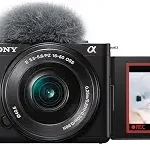
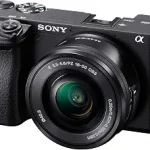
Sony Alpha a6400 Mirrorless Camera (ASIN B07MV3P7M8)
Best Mirrorless Camera Buying Guide — Black Friday Deals 2026
A mirrorless camera shortlist is most useful when it begins with the pictures and videos you plan to make, then checks whether the supplied lens, screen and shooting details suit those plans. This guide compares three kits with different points of emphasis: a flip-out selfie monitor, a Canon kit with a specified APS-C sensor and lens stabilization, and a Sony camera with a flip screen. Black Friday can bring attention to camera listings, but the deal label alone cannot tell you whether the exact package is right for you. Compare the selected camera and lens variant, confirm what the listing includes, and weigh its stated features against your everyday priorities before deciding.
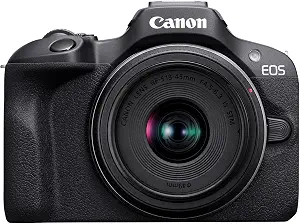
Canon EOS R100 Mirrorless Camera RF-S18-45mm F4.5-6.3 is STM Lens Kit
Canon EOS R100 Mirrorless Camera RF-S18-45mm F4.5-6.3 is STM Lens Kit (ASIN B0C5PGRP7V)
Best Budget is the editorial label assigned to this Canon kit among the options featured here. It does not establish a price, discount or market-wide ranking, so use it as a pointer to a camera worth comparing rather than a claim about what a Black Friday offer will cost. The stated sensor is a 24.1 megapixel CMOS (APS-C) sensor. The included lens is the Canon RF-S18-45mm F4.5-6.3 IS STM Lens Kit, making the lens an important part of the package decision. If you are choosing a first interchangeable-lens setup or replacing a kit, check that the actual listing shows the lens configuration you intend to buy.
For video, the supplied specification is 4K video at up to 24 fps. Keep the frame-rate qualification attached when deciding whether that recording detail fits your plans; the headline 4K description does not replace checking the full listing. Dual Pixel CMOS AF covers a wide area up to 143 zones, a specific autofocus detail to consider for the subjects you expect to frame. Continuous shooting is up to 6.5 shots per second when set to One-Shot AF. That condition matters: it is not a general promise for every autofocus setting or shooting situation. The screen size is 3 inches, which provides a straightforward display detail to compare with the flip-screen options in this guide.
The lens has Optical Image Stabilization at up to 4 stops of shake correction. Treat that as a stated lens feature, not a guarantee that every handheld image or recording will be free of movement. On Black Friday, compare the exact offer variant and included lens before using the Best Budget label to narrow your choices. A listing’s seasonal presentation cannot tell you whether the kit’s video limit, lens or other stated features fit your needs. If you value the specified sensor, autofocus coverage and stabilized included lens as a set, this camera deserves consideration. If a different screen arrangement or another listed shooting detail is more central to your plans, weigh those needs directly rather than assuming one label settles the decision.
Key specs
Sensor
24.1 megapixel CMOS (APS-C) sensor
Video
4K video at up to 24 fps
Autofocus
Dual Pixel CMOS AF covers a wide area up to 143 zones
Continuous shooting
up to 6.5 shots per second when set to One-Shot AF
Included lens
Canon RF-S18-45mm F4.5-6.3 IS STM Lens Kit
Lens image stabilization
Optical Image Stabilization at up to 4 stops of shake correction
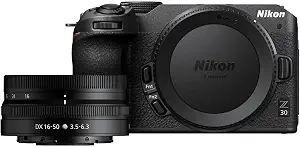
Nikon Z 30 with Wide-Angle Zoom Lens (ASIN B0B527QM4X)
Best Overall is the editorial label for this kit among the cameras in this guide, not a claim of measured superiority. Its Nikkor Z DX 16-50mm f/3.5-6.3 VR Lens is part of the named package, so start by asking whether that bundled lens fits the kinds of framing you expect to do. The camera has a CMOS sensor and an effective still resolution of 20.9 mp. Those concrete details give you a useful point of comparison with the other options without deciding the choice on resolution alone. For a shopper who wants to consider both still photographs and video, the listing specifies 4K resolution.
The flip out touchscreen selfie monitor is a particularly direct fit if you expect to frame yourself or want to see the screen from a different position while composing. That is a feature-based reason for the Best Overall label here, rather than a promise that it will suit every photographer. The stated continuous shooting rate is 11 frames_per_second; treat that as the listed rate, not a guarantee about results with every subject or situation. Bluetooth, HDMI, USB and Wi-Fi are listed for connectivity, giving you named connection options to consider when planning how the camera might fit into your workflow. Check the listing for the precise kit variant before placing an order.
During a Black Friday comparison, this camera makes sense to keep on the shortlist if the selfie monitor, 4K video and included lens all match your intended use. Avoid comparing a listing for this lens kit against a different configuration as though their contents were identical. Confirm the selected variant and read the offer details carefully; no promotion should be assumed from the season or a headline. If still images are your main priority, consider the resolution and stated shooting rate alongside the lens. If you expect to record yourself, the screen is an especially relevant listed feature. The Best Overall label is a concise editorial starting point, while your choice should rest on the combination that fits your own plans.
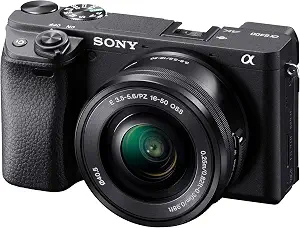
Sony Alpha a6400 Mirrorless Camera (ASIN B07MV3P7M8)
Best for Flip-Screen Framing is the editorial label for this Sony option, based on its listed flip screen. That distinction may be useful if you want a screen that can change position as you compose, but the label is not a measured performance result. The camera has an APS-C sensor and is listed with a 16-50mm Lens. Check the exact listing configuration so the lens information on the offer matches the package you intend to choose. Its mount is Sony E (NEX), a relevant detail to keep in view when comparing this camera with other systems or considering a lens-related purchase.
The supplied video specification is 4K (2160p), and the listed continuous shooting rate is 11 frames_per_second. Read both as stated features rather than as promises about the outcome in any particular scene. If you expect to switch between still photographs and video, these details offer a concise starting point for comparing the camera with the Nikon and Canon kits. The flip screen is the clearest reason this model receives its specific recommendation label in this guide. Consider how you typically frame: a screen that moves may matter to your composition routine, while other listed details may take priority if your plans center on the lens or video specification.
For a Black Friday shortlist, this camera is worth examining when flip-screen framing is high on your list. Compare the precise offer and lens configuration rather than assuming every listing represents the same package. The guide’s label distinguishes the screen-related appeal, but it does not establish that this is the right selection for every buyer. Put the APS-C sensor, 16-50mm Lens, Sony E (NEX) mount, 4K (2160p) video and 11 frames_per_second listed rate alongside your own intended uses. That makes it easier to judge whether the listed combination fits your priorities. Verify the selected variant and the offer details before checkout, and do not infer a promotion from Black Friday wording alone.
Key specs
Sensor size
APS-C
Lens
16-50mm Lens
Mount
Sony E (NEX)
Video
4K (2160p)
Screen
Flip Screen
Continuous shooting
11 frames_per_second
Start with the moments you expect to frame
Before comparing specifications, picture the situations in which you will reach for the camera. You might want to make still photographs, record video, frame yourself, or move between those intentions. Naming your likely uses helps turn a long feature list into a few practical questions. For self-framing, the Nikon’s flip out touchscreen selfie monitor and the Sony’s flip screen are directly relevant listed details. If your plans center on stills, compare each camera’s supplied sensor or resolution information and its stated continuous shooting rate, keeping any conditions attached. If video matters, look closely at the exact wording: the Canon lists 4K video at up to 24 fps, while the Nikon lists 4K resolution and the Sony lists 4K (2160p). Those descriptions are not interchangeable promises about every recording scenario. During Black Friday, make a shortlist from your actual use cases rather than from a seasonal headline. A feature is valuable when it answers a question you genuinely have; it need not be a reason to pay attention if it does not affect how you plan to shoot.
Black Friday: compare the camera and lens as one package
A camera kit is more than the body name in a listing. The Canon package names a Canon RF-S18-45mm F4.5-6.3 IS STM Lens Kit and specifies Optical Image Stabilization at up to 4 stops of shake correction in that lens. The Nikon package lists a Nikkor Z DX 16-50mm f/3.5-6.3 VR Lens, while the Sony listing names a 16-50mm Lens and a Sony E (NEX) mount. Read the exact selected variant and make sure the offer you are considering corresponds to the package you intend to buy. Do not assume two listings have matching contents just because both mention a camera body or a lens. Black Friday deal presentations can make quick comparisons tempting, but the relevant comparison is the actual configuration and its stated details. If the lens is important to your plans, keep its name and any supplied feature information beside the camera specifications as you decide. That simple check helps avoid treating unlike packages as equivalent without evidence.
Put the screen into your composition routine
Screen descriptions can help you decide how a camera might fit into the way you compose. The Nikon listing specifies a flip out touchscreen selfie monitor, while the Sony lists a flip screen. Those details give shoppers who anticipate framing themselves or working with a movable screen something concrete to compare. The Canon listing states a screen size of 3 inches, a different kind of screen detail; it does not provide the same flip-screen wording in the supplied facts. Use each description only for what it says, and consult the exact listing if a particular screen behavior is essential to your decision. Consider when you would look at the display, what position you want it to occupy, and whether touch operation is a priority for your routine. These are personal-use questions, not proof that one arrangement is universally better. When comparing Black Friday offers, resist letting a screen image or a short product title stand in for the specification. Confirm that the selected camera variant matches the screen feature you set out to find.
Read video and still-photo details with their limits
Headline specifications are a starting point, not a complete description of every shooting result. The Canon’s video entry includes both 4K and the qualification up to 24 fps. The Nikon listing says 4K resolution, and the Sony says 4K (2160p). Keep those original descriptions intact rather than translating them into assumptions about other recording modes. For still-photo comparisons, the Canon specifies a 24.1 megapixel CMOS (APS-C) sensor, and the Nikon gives an effective still resolution of 20.9 mp with a CMOS sensor. The Sony fact supplied here identifies an APS-C sensor, without a still-resolution figure. Compare what is actually specified and decide which details matter for your plans; do not fill gaps with guesses. The listed continuous shooting rates also need context: Canon’s up to 6.5 shots per second applies when set to One-Shot AF, whereas Nikon and Sony list 11 frames_per_second. These figures do not guarantee a particular result with every subject. Black Friday is a useful moment to compare exact listings, not a reason to overlook qualifications.
Turn the shortlist into a listing check
Once you have a preferred feature combination, use it to review the offer itself. Check that the selected camera and lens variant matches the package you compared, and read the listing details rather than relying on a general headline. The Nikon names Bluetooth, HDMI, USB and Wi-Fi; consider those stated connections if they matter to the way you expect to connect the camera. Do not assume that an unlisted connection or capability is absent, but do not treat it as included without confirmation either. Keep a short personal checklist: intended subjects, video requirements, preferred screen arrangement, lens package and any connection details you need. Then compare the actual Black Friday offer against that list. The labels in this guide are editorial signposts among these three products, not product tests or market-wide awards. A Best Budget label does not establish a sale price, and Best Overall does not settle an individual buyer’s priorities. Make the final call only after the selected variant and offer details align with your requirements.
Make your Black Friday choice
The right mirrorless camera is the one whose listed kit and features make sense for the pictures and video you plan to create. The Nikon’s flip out touchscreen selfie monitor and named connections, the Canon’s specified APS-C sensor, autofocus coverage and lens stabilization, and the Sony’s flip screen each offer distinct points to weigh. Black Friday can be a prompt to review those options, but not proof that an offer is discounted or suitable. Compare the exact package, preserve the qualifications attached to each specification, and choose by your own priorities rather than by a label alone.