Best Touch Screen Laptop Buying Guide — Black Friday Deals 2026
A touchscreen can make everyday laptop use feel more direct, but the right choice still depends on what you do, which operating system you prefer and how much screen space suits your routine. This Black Friday buying guide compares three distinct options: a Chromebook, a Windows laptop with a 15.6-inch display and a Windows laptop with a 16-inch touch workspace. The Best Overall and Best Budget labels are editorial picks among these listings, not test results or claims about current prices. Before choosing, match the configuration to your needs, then compare the exact model and offer details shown at checkout.
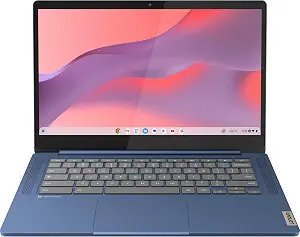
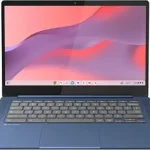
The Lenovo Flagship Chromebook is this guide’s Best Budget pick, an editorial label rather than a claim about its current price or a Black Friday discount. Its 14-inch Full HD touchscreen gives you a touch-enabled display in a more compact size than the two Windows options featured here. That may suit a routine built around browsing, reading, web-based tasks or moving between pages with taps. Consider whether the display size feels appropriate for the material you commonly view, and whether Chrome OS fits the applications you rely on. The operating system is Google Chrome OS, so the most useful first step is checking your software needs instead of assuming that every Windows workflow will carry over.
This configuration uses a MediaTek Kompanio 520 processor with an octa-core layout, 4x A73 @2.0GHz + 4x A53 @2.0GHz, and includes 4GB RAM with 64GB eMMC storage. Those specifics describe the listed model; they are not a guarantee of how it will handle every task. Consider the kind of work you expect to do, how much local storage you need and whether the configuration is a sensible match for your routine. The listing also names Wi-Fi 6, 11ax 2×2 + Bluetooth 5.1 combo and states 13.5 hours of battery life. Use the battery figure as a comparison point, not a certainty about your own usage.
For Black Friday, check the exact listing and configuration before weighing this Chromebook against the Windows laptops. Confirm the product identity and details on the offer itself, then judge whether Chrome OS and the stated memory and storage fit your plans. The Best Budget label is useful as a guide to the role this model plays in this article, but it is not proof that it has the lowest live price or that it is on sale. If you mainly want a touchscreen for familiar web tasks and prefer Chrome OS, this Lenovo deserves consideration. If you need Windows 11 Home or favor one of the larger screens, compare those tradeoffs directly rather than choosing on the label alone.
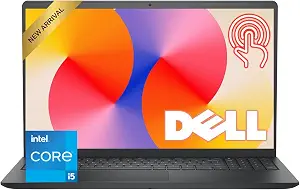
Best Overall is an editorial choice for shoppers who want a broad mix of listed features in a Windows touchscreen laptop. The Dell pairs a 15.6-inch Full HD touch display with a 120Hz refresh rate, IPS panel and anti-glare finish. That combination gives you a clear checklist for considering the screen: its size, touch input, panel type and finish are all stated. Touch can be useful when you want to tap through on-screen controls or navigate a page directly, while the larger display offers more room than a compact laptop screen. Think about where you will use it, too; the anti-glare finish is a listed detail to weigh if your workspace includes bright surroundings, rather than a guarantee that glare will never be an issue.
Its 13th Gen Intel Core i5-1334U processor has 10 cores and speeds up to 4.60GHz, alongside 8GB DDR4 RAM and a 512GB SSD. These are the relevant configuration details to compare against the applications and files you expect to use. Windows 11 Home may be the right starting point if you want a Windows environment, but confirm that your usual software and workflow fit it. The listing also specifies an FHD 1080p webcam and up to 9 hours of battery life. Treat the battery figure as a stated claim, not a promise of the same result in every setting or for every workload.
During Black Friday, compare the exact Dell configuration and offer rather than assuming every listing with a similar name is identical. Check that the processor, memory, storage, display and operating system match the details that matter to you. The Best Overall label reflects this guide’s editorial selection among the three featured products; it does not mean the laptop is best for every shopper. Its mix of a touchscreen, Windows 11 Home, listed webcam and storage capacity makes it a useful option to consider when you want one laptop for varied everyday tasks. If your priorities instead center on Chrome OS or a larger touch workspace, compare the other two listings before deciding.
Key specs
Processor
13th Gen Intel Core i5-1334U processor with 10 cores and speeds up to 4.60GHz
Memory
8GB DDR4 RAM
Storage
512GB SSD
Display
15.6-inch Full HD touchscreen with a 120Hz refresh rate, IPS panel, and anti-glare finish
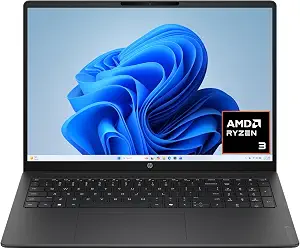
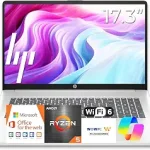
The HP OmniBook 3 earns the Best for a Larger Touch Workspace label because its listing specifies a 16-inch diagonal touch display. That label describes a particular fit within this guide, not a measured ranking. The screen is listed as 2K (1920 x 1200), IPS, micro-edge, anti-glare and 300 nits. These details can help you decide whether the display suits your routine: consider how much room you want for documents, pages or other on-screen material, and whether touch input is useful for the way you navigate. The anti-glare finish and stated brightness are specifications to consider in context, not guarantees about every lighting environment.
The HP runs Windows 11 Home and lists an AMD Ryzen 3 7320U processor with up to 4.1 GHz max boost clock, 4 MB L3 cache, 4 cores and 8 threads. Its configuration includes 8 GB LPDDR5-5500 MT/s onboard memory, a 512 GB PCIe NVMe M.2 SSD and AMD Radeon 610M Graphics. Use those specifics to compare the exact listing with your intended work; the product details alone do not establish how a particular application will perform. The wireless card is listed as MediaTek Wi-Fi 6 MT7920 (2×2) and Bluetooth 5.4. For calls, the listing names a 1080p FHD camera with HDR auto switch, temporal noise reduction and integrated dual array digital microphones.
At Black Friday, verify that the offer is for the HP configuration you mean to consider, including its display and Windows 11 Home. A larger touch workspace can be appealing if you regularly want more room on screen, but it is only one part of the decision: weigh the listed processor, memory, storage and graphics against your needs as well. The camera and wireless details may also matter if calls or wireless connectivity are part of your routine. No one specification settles the choice for everyone. Compare the actual offer and variant with the Dell if you want a 15.6-inch touch display, and with the Lenovo if Chrome OS better matches your software habits.
AMD Ryzen 3 7320U (up to 4.1 GHz max boost clock, 4 MB L3 cache, 4 cores, 8 threads)
Memory
8 GB LPDDR5-5500 MT/s (onboard)
Storage
512 GB PCIe NVMe M.2 SSD
Graphics
AMD Radeon 610M Graphics
Wireless
MediaTek Wi-Fi 6 MT7920 (2×2) and Bluetooth 5.4 wireless card
Camera
1080p FHD camera with HDR auto switch, temporal noise reduction and integrated dual array digital microphones
Operating system
Windows 11 Home
Map your everyday tasks to a configuration
Start by naming the work you expect the laptop to handle. A device used mainly for browsing, reading and web-based tasks may lead you toward a different operating system and configuration than one chosen for a Windows workflow. The Lenovo runs Google Chrome OS, while the Dell and HP list Windows 11 Home. Check the applications and services you depend on before comparing other details; the platform is a practical filter, not a minor specification. If you are uncertain, write down the tasks you do most often and verify that the operating system you are considering supports your intended routine.
Next, treat processor, memory and storage as a set of clues about the configuration, not as a substitute for your own requirements. The three listings differ: the Lenovo has 4GB RAM and 64GB eMMC, while the Dell lists 8GB DDR4 RAM and a 512GB SSD, and the HP lists 8 GB LPDDR5-5500 MT/s onboard memory with a 512 GB PCIe NVMe M.2 SSD. Each product also names its own processor. Consider how much local space you want for files and which applications you plan to use. For Black Friday, compare those exact details on the offered variant instead of choosing from a product name or promotional wording alone.
Decide how much room the touch display should give you
A touchscreen is most useful when its size and finish suit the way you work. The Lenovo lists a 14-inch Full HD touchscreen; the Dell has a 15.6-inch Full HD touchscreen with a 120Hz refresh rate, IPS panel and anti-glare finish; and the HP has a 16-inch diagonal touch display with 2K (1920 x 1200) resolution, IPS and anti-glare features. Think about whether you will mostly read, move through web pages, work with documents or use several on-screen elements at once. A larger listed display may be worth considering if you value more screen area, while a smaller one may better fit your preferred setup. These are choices to make from the stated sizes, not claims that one is universally better.
Pay attention to the other display details that are actually listed. The Dell’s refresh rate and IPS panel, and the HP’s 300 nits and micro-edge description, give you additional points to compare. The Lenovo’s listing identifies its display as Full HD but does not provide the same set of panel details. Do not treat an unlisted specification as evidence that a feature is absent; simply use the information available and check the exact listing if a particular detail matters. During Black Friday, verify the display description attached to the offer you are considering. A touchscreen alone does not determine whether a screen fits your desk, lighting or preferred way of working.
Make the Black Friday comparison about the exact offer
A Black Friday headline cannot tell you whether a particular laptop configuration suits your needs. Before comparing offers, identify the exact product and match its listed details to your shortlist: operating system, processor, memory, storage and display. This matters especially when products have similar names or when a page presents multiple variants. Check the model associated with the offer and confirm that the configuration shown is the one you intended to compare. Do not assume that an offer includes a different specification simply because a nearby listing or product title suggests it.
Once you know which variant you are viewing, compare the offer details presented for that item and decide whether its configuration meets your own priorities. The Best Overall and Best Budget labels here are editorial choices among these three products, not evidence of a current promotion, a market-wide result or a specific saving. The HP’s Best for a Larger Touch Workspace label points to its stated display size, not to a price advantage. If an offer’s details are unclear, pause and verify them on the listing before deciding. This keeps your Black Friday comparison focused on a product you have identified, rather than on a label or headline detached from its configuration.
Use battery, camera and wireless details with care
The listed battery figures are not directly interchangeable promises about your day. Lenovo states 13.5 hours, while Dell states up to 9 hours; the HP details supplied here do not include a battery-life figure. Consider these claims as one part of a comparison, and think about whether you typically work near a power source or value a stated battery figure when narrowing your choices. The information does not establish how long a device will last in your particular routine. Avoid treating a number from a listing as a guarantee of the same result under every workload or setting.
Connectivity and camera details can help distinguish what is documented. The Lenovo lists Wi-Fi 6, 11ax 2×2 + Bluetooth 5.1 combo; the HP lists MediaTek Wi-Fi 6 MT7920 (2×2) and Bluetooth 5.4 wireless. The Dell specifies an FHD 1080p webcam, and the HP lists a 1080p FHD camera with HDR auto switch, temporal noise reduction and integrated dual array digital microphones. If calls, wireless use or a built-in camera matter to your routine, compare the details that are stated for the exact model. For Black Friday, confirm that those specifications belong to the offer you are viewing rather than assuming they apply to every configuration with a similar product name.
Turn your shortlist into a practical choice
Before deciding, rank your priorities rather than trying to make every feature equally important. You might put operating system first, then display size, then storage; someone else may prioritize a larger touch workspace or a listed camera. The Lenovo is the Chrome OS option with a 14-inch Full HD touchscreen. The Dell and HP both list Windows 11 Home, with different display sizes and configurations. Use those distinctions to remove products that do not match your routine, then compare the remaining details that matter to you. A clear shortlist is more useful than treating a single specification as the deciding factor.
Make a final pass over the actual listing before acting on a Black Friday offer. Check the product identity, the variant and the specifications relevant to your choice; then weigh the offer as presented without assuming a discount, stock status or other promotion. If two options remain, describe the tradeoff in everyday terms: for example, whether you would rather use Chrome OS or Windows 11 Home, or whether the listed screen size suits your workspace. The right choice depends on that fit, not on the editorial labels alone. Keep a note of the details you verified so a last-minute change in the selected variant does not undermine your comparison.
Make your Black Friday choice
A considered touchscreen-laptop choice starts with your software and routine, then narrows through display size, configuration and the supporting details you care about. The Lenovo, Dell and HP each present a different combination, so compare the exact listing rather than expecting one model to suit every shopper. Black Friday can be a useful time to review offers, but the offer itself does not replace checking the product variant and specifications. Use the labels in this guide as starting points, verify the details that matter to you and choose the laptop whose stated configuration best fits your plans.