Best Xero Shoe Buying Guide — Black Friday Deals 2026
A Black Friday search for a Xero shoe can quickly turn into a choice between different kinds of outings. The three options here are identified as a barefoot sneaker, barefoot running shoes, and a barefoot trail running shoe. Those names offer a useful first way to sort them, but they do not answer personal questions about fit, feel, or the right choice for a particular routine. This guide treats the labels as starting points, not proof of performance. The Prio is marked Best Budget, the HFS II Best Overall, and the Mesa Trail 2 Best for Trail Running—editorial signposts within this selection, not test results or claims about every shopper. As Black Friday listings change, compare the exact model and selected variant before deciding.
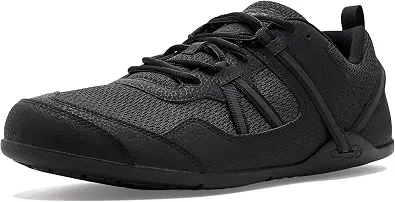
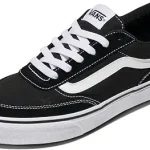
The Xero Shoes Men’s Prio Barefoot Sneaker is the option to consider when your search begins with a sneaker rather than a shoe explicitly named for running or trail running. Its product name supplies that category distinction; it does not, by itself, establish how the shoe will feel or whether it suits a particular person. The editorial label is Best Budget, a way to navigate this three-product guide rather than a statement that the Prio has a lower Black Friday price or beats other shoes on value. Check the actual listing and offer instead of treating the label as a prediction about cost.
For a planned day that includes ordinary errands or time spent moving between activities, the word “sneaker” may make the Prio a natural candidate to investigate first. That is a shortlist decision based on the named shoe type, not a claim about comfort, durability, or performance. If you are comparing it with a model named for running, ask yourself whether your main need is a general sneaker category or a shoe whose stated category more directly matches a running plan. Black Friday can make the comparison feel urgent; keeping the intended use in view helps prevent the event from becoming the reason for choosing.
The supplied listing facts identify the item model number as PRM and the department as mens. They also give package dimensions of 13.66 x 8.98 x 4.61 inches and a package weight of 1.5 pounds. Those are package details, not measurements of the shoe or evidence about its fit, shape, or on-foot weight. If a listing page shows size or other selectable variants, confirm the selected option yourself before placing an order; the facts provided here do not specify those choices. During Black Friday, make sure the offer you are comparing belongs to the intended Prio listing and variant, rather than relying on a general campaign message.
A practical reason to keep the Prio in the running is simple: it is the named barefoot sneaker among these choices, and the Best Budget tag helps readers find it quickly. Neither point settles whether it is the right purchase for you. Review the item details that matter to your own decision, including the exact model identity and the selected listing option, then compare the displayed offer with the other candidates on equal terms. If your plan centers on trail running or running shoes in particular, compare the Mesa Trail 2 or HFS II categories as well. Black Friday is a shopping occasion, not a substitute for that activity-based check.
Xero Shoes Men’s HFS II Barefoot Running Shoes (ASIN B0CGBCHZ5R)
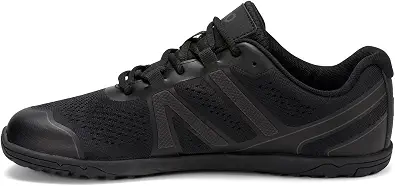
The Xero Shoes Men’s HFS II Barefoot Running Shoes are the clearest match in this group for a shopper whose first priority is a product explicitly identified as running shoes. The supplied details call the model HFS II, name Xero Shoes as the brand, and identify the department as Men’s. Its Best Overall label is an editorial navigation choice among the featured products, not the result of comparative testing or a promise that it will suit every runner. On Black Friday, use the label to find the listing, then let your own use case and the exact listing details do the deciding.
Picture the question that brought you to this category: are you shopping specifically for running shoes, or do you need a sneaker for a wider mix of plans? If running is the central purpose, HFS II deserves a place on your shortlist because that purpose appears in the supplied shoe type. This does not establish how it performs, how it feels, or which surface it is appropriate for. Those questions call for details beyond the facts available here. Treating the product name as a category cue keeps the choice grounded without turning a label into a claim about real-world results.
The name also helps distinguish this listing from the Prio sneaker and the Mesa Trail 2 barefoot trail running shoe. That distinction matters when Black Friday pages place products in broad footwear groupings or present offers in a way that makes different models appear interchangeable. Check that the product page identifies HFS II and that the option selected is the one you intend to consider. Do not assume the offer or any displayed details automatically apply to another model or variant. Compare the listing presented to you, rather than extrapolating from a campaign headline.
Best Overall should be read narrowly: it is this guide’s editorial label, not a measurement, rating, or market-wide award. The model may be a useful starting point if you want a barefoot running shoe and value a straightforward category match. If your likely route is specifically a trail-running one, compare the Mesa Trail 2’s stated category and rubber outsole instead of assuming the HFS II is the better choice. Black Friday shopping works best here as a chance to review relevant listings—not as evidence that one category is universally right. Make the final choice only after the model, selected option, and offer details line up with your own priorities.
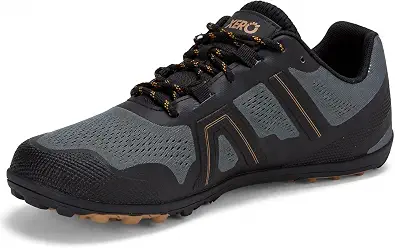
The Xero Shoes Men’s Mesa Trail 2 Barefoot Trail Running Shoe is the option in this group whose stated category specifically names trail running. That makes it a logical listing to inspect when your plan involves looking for a trail-running shoe, rather than simply browsing barefoot sneakers or running shoes generally. The supplied facts also identify a rubber outsole. They do not describe the outsole’s grip, the shoe’s performance on any particular surface, or how it feels, so those conclusions should not be inferred. Its Best for Trail Running label reflects the stated product category, not a measured advantage over the other models.
A useful decision journal for this shoe starts with the route you have in mind. Is trail running the defining purpose of the purchase, or is it one possibility among several? If the trail category is central, the Mesa Trail 2 gives you a direct product-name match to investigate. If the plan is more general running, compare it with the HFS II, which is identified as barefoot running shoes. If your search is for a sneaker, compare the Prio. These are ways to organize the shortlist based on stated categories, not promises about what each product can do during a particular outing.
The rubber outsole is a concrete detail to note while reviewing the Mesa Trail 2 listing. It is not enough on its own to determine whether the shoe meets your needs: no tread pattern, traction result, terrain rating, or other outsole information is supplied here. Use the specific product page for any details you consider essential, and avoid filling gaps with assumptions based on the word “trail.” The model name is Mesa Trail 2, the brand is Xero Shoes, and the department is mens. Confirm that those identifiers match the listing you mean to compare during Black Friday.
This is the trail-focused choice in the guide, but the label should narrow your search rather than end it. Compare the live offer for the exact Mesa Trail 2 listing and selected option with the corresponding offer for any alternative you are considering. A Black Friday banner alone does not establish which model is included or what terms apply to the item in your view. If a detail about size, fit, or terrain matters to your decision, verify it on the listing rather than assuming it from the product name or outsole material. The most useful reason to keep this model on the shortlist is the specific trail-running category stated in its name.
Key specs
Brand
Xero Shoes
Model
Mesa Trail 2
Department
mens
Shoe type
Barefoot Trail Running Shoe
Outsole
rubber outsole
Turn your planned day into a useful first filter
Start with the main activity you are shopping for, not with a sale message. For a general sneaker search, the Prio is the product here identified as a barefoot sneaker. For running shoes, the HFS II is explicitly named as barefoot running shoes. For trail running, the Mesa Trail 2 is named as a barefoot trail running shoe. Those categories provide a practical first pass through the listings without asserting that any product is suitable for every person, route, or session.
Then write down what the shoe needs to do in your own routine. Maybe you expect one main activity, or perhaps you are choosing between a regular day and a specific run. This is a way to clarify priorities, not a claim that a shoe is versatile or appropriate for activities beyond its stated category. If your plans do not fit neatly into one label, compare the relevant product information and decide which questions you need answered before purchase.
Black Friday can encourage quick decisions because an offer is presented alongside a limited amount of information. Resist letting the event choose the category for you. A clear activity-first shortlist makes it easier to compare like with like and to notice when two product names point toward different uses. Keep the intended model written down while browsing, then check the listing you open against that shortlist. The aim is not to predict performance from a name, but to avoid treating three distinct categories as interchangeable simply because they appear in the same shopping search.
Read Black Friday listings as individual offers
A Black Friday message is not enough to identify the item behind it. Open the product listing and confirm the model name: Prio, HFS II, or Mesa Trail 2. Then check the selected option shown on that page before comparing what is offered. This helps keep the comparison tied to the actual item you are considering instead of a broad category page, an adjacent product, or a general event headline. The supplied records do not establish current promotions, prices, stock, or offer terms, so those details need to be checked directly at the time you shop.
Keep a simple note for each candidate: the model, stated shoe category, selected listing option, and offer details visible to you. Compare each item using the same questions. If one page displays information that another does not, treat that as an unanswered question rather than assuming the products differ in a particular way. Do not infer that a Black Friday offer applies across every model or selectable option merely because the products share a brand.
This method is especially helpful when an editorial label catches your eye. Best Budget, Best Overall, and Best for Trail Running are guide labels, not price promises or guarantees about a promotion. Check whether the item that interests you is actually the model you intended to inspect, and base any purchase decision on the listing as presented. A sale headline can point you toward a page; it cannot replace verifying which product and option the offer concerns.
Keep the product details in proportion
Use the information available at the level it supports. The Prio facts include package dimensions, package weight, model number PRM, department, and manufacturer. The package measurements and weight describe the package, not the shoe on a foot. They do not answer questions about fit, feel, flexibility, or suitability for a particular activity. Likewise, the HFS II’s supplied facts identify its model and running-shoe category, but do not provide a performance result. Knowing where a fact stops is part of making a careful comparison.
For the Mesa Trail 2, the rubber outsole is a stated component detail. It does not tell you how the shoe behaves on a route or establish a particular level of traction. A trail-running name and an outsole material can help you identify what listing to research, while leaving specific terrain questions open. If those details are essential, look for information about them on the exact product page rather than turning a broad label into a technical conclusion.
A Black Friday listing may show details not included in this guide, or may leave some questions unresolved. Keep the distinction clear: confirmed listing facts can inform a decision, while missing details remain unknown here. Avoid treating the absence of information in a short specification set as proof that a feature is absent. This careful reading makes the comparison more useful without overstating what the names, categories, or package specifications can establish.
Make fit and variant questions your own
The records here do not provide sizing guidance or explain how any of the three models fits. That means a shopper should not assume that one model’s fit can be predicted from another’s name or category. Before buying, identify the questions that matter to you: which option is selected, what sizing information is displayed, and whether the listing provides guidance relevant to your needs. If a required answer is not available, treat that as something to resolve rather than guessing from the product label.
Check the exact item page again after choosing a size or other available option. The product identity and the selected variant should remain clear as you move through the offer. This is a useful habit in ordinary shopping, and it matters during Black Friday when several product pages may be open at once. Do not assume that details shown for one selection automatically describe another; verify what is displayed for the option you intend to purchase.
Also separate personal fit priorities from the editorial tags. The Best Overall label does not establish that HFS II fits a particular foot, and Best Budget does not answer a sizing question about the Prio. Best for Trail Running identifies the Mesa Trail 2’s stated category, not a fit guarantee. Write down what you need to verify, then return to that list before checkout. A sound decision can include unresolved questions; it should not disguise them as facts.
Use the labels as a shortlist, not a verdict
The three labels make it easier to navigate this guide: Best Budget for the Prio, Best Overall for the HFS II, and Best for Trail Running for the Mesa Trail 2. They are editorial choices among these featured products, not test findings, rankings based on measured outcomes, or awards covering the whole market. Their value is organizational. Each points to a reason to begin with a particular listing—the Prio’s sneaker category, the HFS II’s running-shoe category, or the Mesa Trail 2’s trail-running category.
Translate the label into a question before acting on it. For Best Budget, ask whether the Prio is the sneaker category you want, then inspect the actual Black Friday offer. For Best Overall, ask whether the HFS II’s stated running-shoe category matches your plan. For Best for Trail Running, decide whether the Mesa Trail 2 is relevant to your intended search and review the rubber outsole detail without assuming a particular result on the trail. A label should guide the next comparison, not settle it.
If none of those starting points matches your plans, do not force a choice just because the guide contains three options. Compare only the details that matter to your purchase, identify what remains uncertain, and confirm the listing and selected option. That keeps an editorial shortcut useful without turning it into a substitute for individual judgment.
Make your Black Friday choice
The most dependable way to choose among these Xero shoes is to begin with the activity named in your plan, then check the matching product category and the exact listing. The Prio is the barefoot sneaker in this group; HFS II is identified as barefoot running shoes; and Mesa Trail 2 is identified as a barefoot trail running shoe with a rubber outsole. Those facts help sort the shortlist, but they do not establish fit or individual performance. As Black Friday offers appear, verify the model, selected option, and offer details rather than relying on a campaign headline or editorial label. Make the decision around the questions you can confirm—and pause if an essential detail remains unclear.