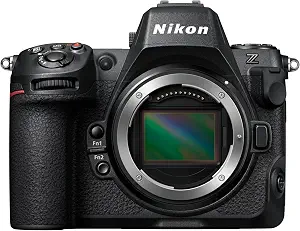
A Black Friday camera decision is easier when it starts with the pictures and video you actually plan to make, rather than with a headline deal. The Nikon Z 8 brings a 45.7MP stacked CMOS sensor, EXPEED 7 processing, subject detection and 3D tracking, several continuous-shooting options, and internal high-resolution video modes. That range makes it worth considering for a mixed stills-and-video workflow, but the useful question is whether its capture and file choices fit your own projects. Use Black Friday as a reason to compare the exact listing and configuration against that plan—not as a reason to buy on the strength of a promotion alone.
Imagine planning a day that could include a carefully composed still, a moving subject, and a short video sequence. The Z 8 offers different tools for those parts of the plan: a 45.7MP stacked CMOS sensor and EXPEED 7 processing for image capture, autofocus that combines subject detection with 3D tracking, and internal 8K/60p and 4K/120p video. Its still-image options include RAW and HEIF as well as JPEG, while video recording includes N-RAW and ProRes RAW. These are useful choices to evaluate, not a promise that every format or rate will suit every assignment.
For a Black Friday shortlist, this is a camera to assess by workflow rather than by one headline specification. Think about the subjects you expect to photograph, the kinds of files you want to finish, and whether video belongs in the same setup. The product facts describe several capture options, but they do not establish a sale price or the contents of any particular offer. Confirm the exact listing and variant you intend to buy before deciding.
Plan the still-image finish before choosing a format
The sensor’s 45.7MP resolution gives detail-conscious still photography a clear place in the decision. Before Black Friday, decide whether you expect to work with RAW 14-bit, High Efficiency RAW, 10-bit HEIF, or JPEG 8-bit. Those are the listed still-image formats; choosing among them is a matter of how you want to handle and finish your images, not a claim that one option is universally best.
A practical decision journal might begin with the final destination for a set of pictures. If you want a RAW workflow, note which of the two RAW options you intend to use and why. If you prefer a finished image format, consider whether HEIF or JPEG 8-bit belongs in your plan. The supplied specifications do not describe file sizes or editing requirements, so avoid assuming those details from the format names alone. Instead, check that your own software and handoff process are ready for the files you choose.
This also gives you a useful way to compare Black Friday offers: verify that the listing is for the intended camera and then return to your format priorities. A promotional label cannot tell you whether a particular capture format fits your next project.
Set expectations for focus in your shooting situations
The autofocus specification combines subject detection and 3D tracking, and states that focus can be detected as low as -9 EV. Those details may matter when you are planning scenes with moving subjects or working in dim conditions. Treat the low-light figure as one focus specification, however; it does not by itself describe every aspect of low-light image-making or guarantee a particular result with every subject.
For a planned shoot, write down what you need the camera to follow and how you expect to compose the scene. Then consider whether subject detection and tracking address that need. This is more useful than treating the presence of named autofocus functions as a universal answer for portraits, events, wildlife, or any other category. The facts provided do not specify subject-recognition categories, so do not assume a particular detection mode from this description.
During Black Friday comparisons, keep the focus question tied to your actual subjects. If two listings appear similar, check the exact product identity and configuration rather than relying on a brief offer description. The camera’s stated focus features are a solid basis for a shortlist, but your shooting priorities should determine whether they make this the right choice.
Choose a continuous rate that serves the moment
The Z 8 lists continuous shooting options of 20, 30, 60, and 120 fps. Having several rates to consider can help you plan how to approach a sequence, but the highest listed figure need not be the automatic choice for every scene. Start by asking whether you need to capture a changing moment as a sequence or whether a more deliberate approach is better suited to the pictures you want.
A sequence can leave you with more frames to review, so think through selection and organization before setting out to shoot. That is a workflow consideration, not a stated performance limitation. The provided facts do not give recording durations or other conditions for these rates; check the product details if those specifics are important to your plans. Avoid building a decision around assumptions about how long a particular setting can be used.
Black Friday can make it tempting to focus on the most striking number in a specification list. Instead, connect the available rates to the moments you expect to photograph and the time you can spend choosing among frames afterward. That keeps the camera’s burst options in context and gives you a practical reason to keep or remove it from your shortlist.
Black Friday video planning: work back from the finished clip
For video, the stated internal options are 8K/60p and 4K/120p. Consider which of those capture modes fits the project you have in mind, rather than choosing based on the larger-sounding label alone. A planned delivery, the type of motion you want to record, and the role video will play in your work are useful questions to answer before comparing offers. The listed modes do not, by themselves, explain every recording condition or production requirement.
The camera also records internal 12-bit N-RAW and ProRes RAW. If RAW video is part of your plan, decide which of those formats you intend to use and confirm that your downstream workflow is suitable. The provided information does not spell out editing-system compatibility, storage needs, or other production details, so verify those independently before purchase rather than assuming them.
When checking a Black Friday listing, compare the exact camera and stated configuration with your video checklist. A deal is only relevant if the offer matches what you mean to buy, and the available facts do not establish that a promotion is active or that one listing is better value. Let your finished-project needs guide the comparison.
Black Friday checklist: verify the offer against your plan
Before checkout, bring the decisions together: the still-image format you expect to use, the autofocus features relevant to your subjects, the continuous rate you will actually select, and whether internal video or RAW video belongs in your work. This turns a broad camera comparison into a list of specific requirements. It also helps separate features you will use from options that are interesting but not central to your next project.
Next, inspect the exact Black Friday listing and confirm that it identifies the intended product and variant. Compare the offer details shown on that listing with your own checklist; do not infer a discount, included item, or seller policy from the camera specifications. If a detail matters to your purchase but is not stated in the information you have, verify it on the listing before deciding.
Finally, consider the whole capture-to-finish sequence. The camera’s still formats, frame rates, and video options give you several choices to make, and those choices can shape how you organize a project. A deliberate purchase is one where the features you are paying attention to answer a real need, even if a seasonal offer is what prompted you to look.
Key specs
Sensor and processor
45.7MP stacked CMOS sensor and EXPEED 7 processing engine.
Autofocus
detects focus as low as -9 EV, combines subject detection and 3D tracking.
Video
Internal 8K/60p and 4K/120p video.
RAW video
Internal 12-bit N-RAW and ProRes RAW recording.
Still image formats
RAW 14-bit, High Efficiency RAW, 10-bit HEIF and JPEG 8-bit.
Continuous shooting
20, 30, 60 and 120 fps shooting options.
Make your Black Friday choice
The Nikon Z 8 is worth considering if its stated still-image, autofocus, continuous-shooting, and internal video options align with the work you have planned. Before committing during Black Friday, check the precise listing and variant, then revisit the file formats and capture modes you expect to use. That keeps the decision grounded in your own workflow—and avoids treating a seasonal promotion as a substitute for checking the details.